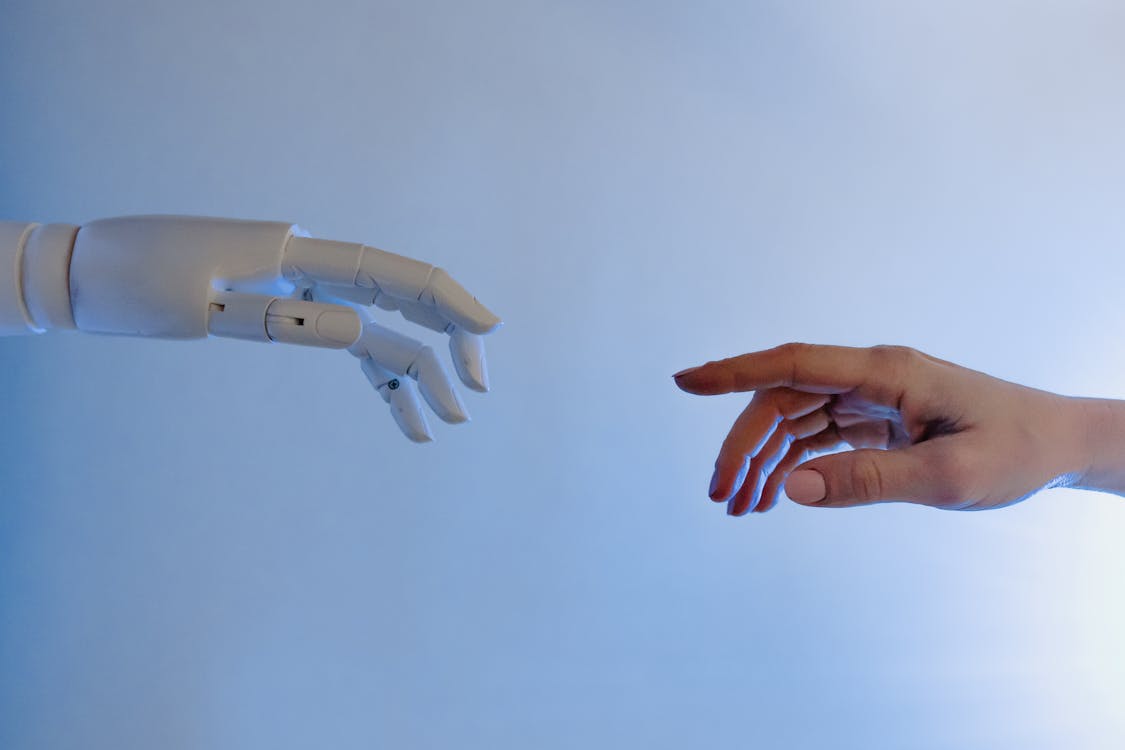
The rapid adoption of AI agents across all commercial sectors is bringing with it a huge cyber risk that companies are currently ill-equipped to deal with. AI agents are becoming increasingly autonomous and are becoming an integral part of organizations’ daily workflow. They have already come to represent a new insider threat and an easy entry point for bad actors wishing to comprise a target company’s IT systems and encrypt its critical data as a precursor to a full-blown ransomware attack.
According to Steve Povolny, Vice President AI Strategy & Security Research at California-based global cybersecurity firm, Exabeam: “AI agents may constitute a new category of insider risk, when they operate with delegated authority, privilege access, or autonomy inside trusted environments. Threat actors may be able to compromise or manipulate AI agents, for example, sending it a weaponized Excel spreadsheet. When an AI agent opens the spreadsheet, it may encounter covert or hidden instructions to influence its behaviour and cause it to expose log-in information or other critical data.”
However, despite the inherent risks, companies are now in a position where they see the rapid adoption of agentic AI as crucial if they are to maintain competitive advantage. According to research giant Gartner, by 2028 90 per cent of business-to-business (B2B) buying will be AI agent intermediated, pushing over $15 trillion of B2B spend through AI agent exchanges. Microsoft also reports that more than 75 per cent of knowledge workers now use AI on the job, accelerating the shift toward agent-driven workflows.
AI agents are now also becoming increasingly autonomous. An AI agent has been granted a loan in the first step to AI agents becoming truly autonomous. US-based financial infrastructure company, Bank of Bots (BOB), granted the landmark loan. An AI agent applied for the loan, cryptographically signed the loan agreement using its own identity key and is managing repayment autonomously, with the loan being underwritten using the AI agent’s existing economic activity.
Rapid adoption of autonomous AI agents puts companies at risk
The rapid adoption of increasingly autonomous AI agents is already putting companies at risk. Inputs that appear normal to humans can be subtly manipulated to influence how models interpret or classify them. According to Exabeam, small imperceptible pixel shifts can enable a phishing email to bypass an AI spam filter.
According to the UK’s Information Commissioner’s Office, cyber criminals are already increasingly using AI to carry out attacks that are faster, more advanced and harder to detect. Specialist insurer Beazley’s Quarterly Threat Report for Q1 2026 also reports a significant rise in exploited vulnerabilities as cyber criminals increasingly use AI-powered methods to accelerate attacks.
Povolny also observes that cybercriminals are using AI to create convincing spoofed websites that are virtually indistinguishable from genuine corporate websites. Using AI, threat actors can rapidly create an accurate copy of a corporate website, a task that was previously the remit of highly-skilled and experienced threat actors. Targeted key staff can then be directed to the deepfake website, where their credentials can be harvested and used to gain entry to the company’s systems.
There are numerous other ways in which AI is lowering the barrier for threat actors and increasing opportunities to exploit human trust and error. AI-driven spear-phishing attacks, designed to target key employees, now use deepfake voice calls that enable the threat actor to sound exactly like a trusted colleague or a familiar voice from the firm’s IT help desk.
It is not only in private companies that the rapid adoption of AI is creating potential vulnerabilities. Public bodies and critical utilities are also adopting agentic AI to create efficiencies and streamline operations, leaving potential security gaps in critical infrastructure such as energy and water facilities that can be exploited by threat actors working on behalf of terrorist groups and potentially hostile nation states.
The UK’s National Cyber Security Centre (NCSC) says: “The growing incorporation of AI models and systems across the UK’s technology base, and particularly within critical national infrastructure, almost certainly presents an increased attack surface for adversaries to exploit.”
“There will almost certainly be a digital divide between systems keeping pace with AI-enabled threats and a large proportion that are more vulnerable, making cyber security at scale increasingly important to 2027 and beyond,” warns the NCSC.
The danger of AI agents being increasingly weaponised, manipulated or compromised by threat actors is now a reality and takes the insider threat to a whole new level. Traditional cyber-defenses and existing protocols aimed at reducing the insider risks from employees no longer offer sufficient protection.
According to Exabeam: “You can’t predefine how every AI agent will behave across every workflow. You can’t anticipate every way a compromised account might be used. You can’t write rules for behavior that has never existed before.”
A whole new way of tackling the insider threat needs to be implemented. Exabeam believes that behavioral analytics can add this much-needed extra level of security. Instead of asking, “Is this known bad?” behavioral analytics asks, “Is this normal for this identity?” It observes how users and entities typically interact with systems, applications, and data. It then identifies deviations that indicate elevated risk.
In one real-world scenario, Exabeam reports that a compromised account accessed sensitive data using approved tools during normal business hours. Behavioral analytics identified the risk early, before escalation.
“Once risk is identified, AI-assisted workflows can accelerate triage, investigation, and response activities. Analysts spend less time manually assembling evidence across multiple tools,” says Exabeam.