At the end of September, during a nor'easter, a driver in Belmont, Massachusetts, was trapped in his car when the road gave way beneath him.1 Days later, a sinkhole closed northbound U.S. 24 near Detroit.2 In both cases, the problem had been building underground before anyone could see it on the surface.
Robots get most of the attention in the conversation about physical AI. Humanoids in warehouses and machines that fold laundry make for good demos. The bigger opportunity may be quieter. America's roads, bridges and drainage networks are the largest physical system most of us depend on every day, and they are aging faster than anyone can inspect them.
The American Society of Civil Engineers gave America's roads a D+ in its 2025 Report Card, with 39% of major roads in poor or mediocre condition. The country's bridges average about 47 years old.3 Repairs are also getting more expensive. In April, the asphalt price tracked by New York State reached $730 a ton, up from $621 a year earlier.4
Physical AI is usually described as AI that perceives and acts in the real world. For infrastructure, perceiving is the difficult step. A bridge does not produce clean data. What we know about it is scattered across inspection reports, photographs, maintenance logs, traffic counts and engineers' notes, often held in different systems and written in different formats over decades. Teaching a model to read all of that, and to connect it to the structure it describes, is harder than most of the text tasks AI handles today.
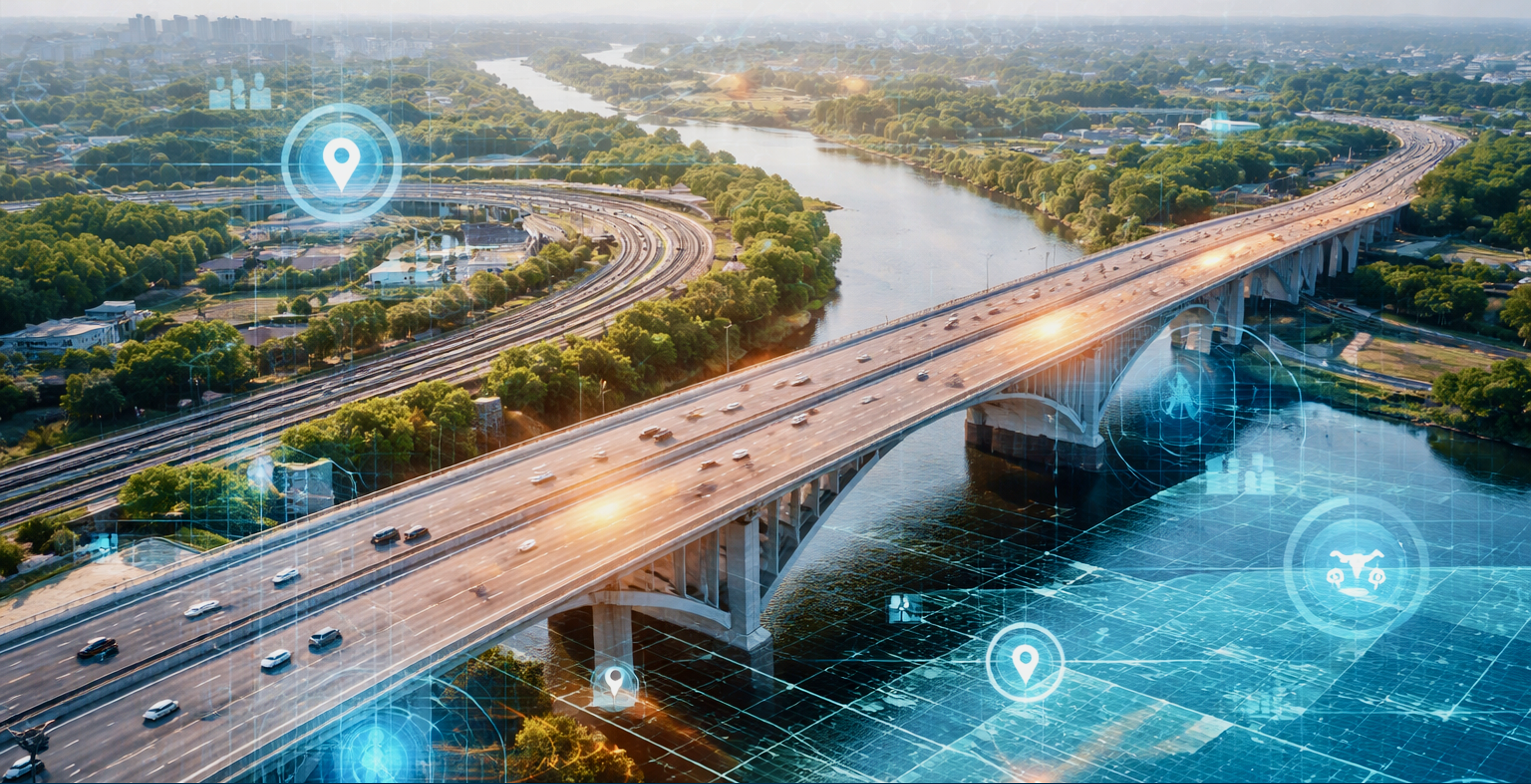
Satellites are adding a new layer. A radar technique called InSAR compares repeat passes over the same ground and can detect vertical movement of less than an inch. It can show soil shifting beneath a road, a bridge moving because of the ground it sits on, or standing water around a culvert that suggests a blockage. This month, my company, Dynamic Infrastructure, launched a service that brings these satellite readings to road agencies, combined with their own engineering records.
On its own, a satellite reading is just a map of movement. Sinking ground under a quiet rural lane is a different problem from sinking ground under a road where heavy truck traffic is forecast to grow. The reading only becomes useful when AI connects it to everything else an agency knows about that road. That fusion of physical measurement and engineering history is where physical AI earns its name.
A map of weaknesses is also a target
Bringing all of that information together creates something new: a single, ranked picture of where a region's roads, bridges and drains are most fragile. For engineers, that is exactly what they need. In the wrong hands, it is a list of where to cause the most disruption.
That risk is not hypothetical. In 2024, U.S. and allied agencies warned that a China-linked group known as Volt Typhoon had compromised IT networks in the transportation, water, energy and communications sectors, and assessed with high confidence that it was positioning itself to disrupt operations. In some networks it had kept access for at least five years.5 This summer, attackers broke into internet-facing control equipment at water and wastewater utilities in at least seven states, changing passwords and settings and, in some cases, causing pressure loss and flooding.6 The Government Accountability Office has noted that the agencies overseeing transportation and three other sectors reported almost half of all ransomware attacks.7
Physical AI will sit closer to real-world systems than any software before it. That means security has to be built in from the first line of code.
Rules for AI that touches the physical world
When a chatbot gets something wrong, someone loses a few minutes. When an AI system misjudges a bridge, the consequences are counted differently. Building AI for physical assets has taught me a few rules that I think apply well beyond infrastructure.
The system has to show its working. An engineer signing off on a repair needs to see the specific reading, photograph or report behind an alert. A model that gives answers without reasons has no place in a field where errors cost lives.
It has to be tested by people with something to lose. Accuracy claims mean little until an outside party with its own money or reputation at stake has examined them. In civil engineering, that kind of scrutiny should be expected before anyone relies on the results.
It has to protect what it knows. An agency should decide where its infrastructure data lives and who can see it. A detailed map of weak points should be guarded as carefully as the assets themselves, and the systems that analyze it should be kept separate from the systems that operate anything.
And a person has to make the final call. The value of AI here is in giving a small team of engineers a complete picture, ranked by risk, so their judgment goes where it matters most. The decision to close a road or fund a repair stays with them.
Why it matters now
Many counties have only a handful of engineers responsible for hundreds of bridges, culverts and miles of road. They spend much of their time assembling information that already exists somewhere in their own files. Physical AI can take on that assembly work and give them time back for engineering.
It also changes the economics of prevention. Preventive maintenance is hard to fund because success is invisible. A road that doesn't fail never makes the news. Resurfacing a single mile can cost hundreds of thousands of dollars, and when the cause sits underground, the same mile may need resurfacing again a year or two later. Evidence that a specific stretch of ground is moving gives engineers a stronger case to fix it early.
Weather adds urgency. Unstable ground is more vulnerable during hurricanes and long spells of heavy rain, and a blocked culvert cannot carry stormwater away. Knowing which roads sit on moving ground before a storm, and where the ground has shifted after one, helps crews get to the right places first.
The robots will keep getting better, and they will deserve the attention they get. But some of the most valuable work physical AI will do this decade will happen out of sight, helping engineers find the roads and bridges that look fine today and won't in a few years, and doing it in a way that keeps that knowledge safe.
Saar Dickman is CEO of Dynamic Infrastructure, the Engineering AI Agent platform for critical civil assets, which works with agencies across 15 US states, the UK and Australia.